By Mercy Gadia
The Federal Government on Tuesday expressed concern over emerging changes in global health funding, declaring that Nigeria must assume primary responsibility for the health of its citizens.
Minister of State for Health and Social Welfare, Iziaq Adekunle Salako, stated this in Abuja while receiving the Ambassador of Spain to Nigeria, Felix Costales Artieda, who paid a courtesy visit to the Federal Ministry of Health and Social Welfare.
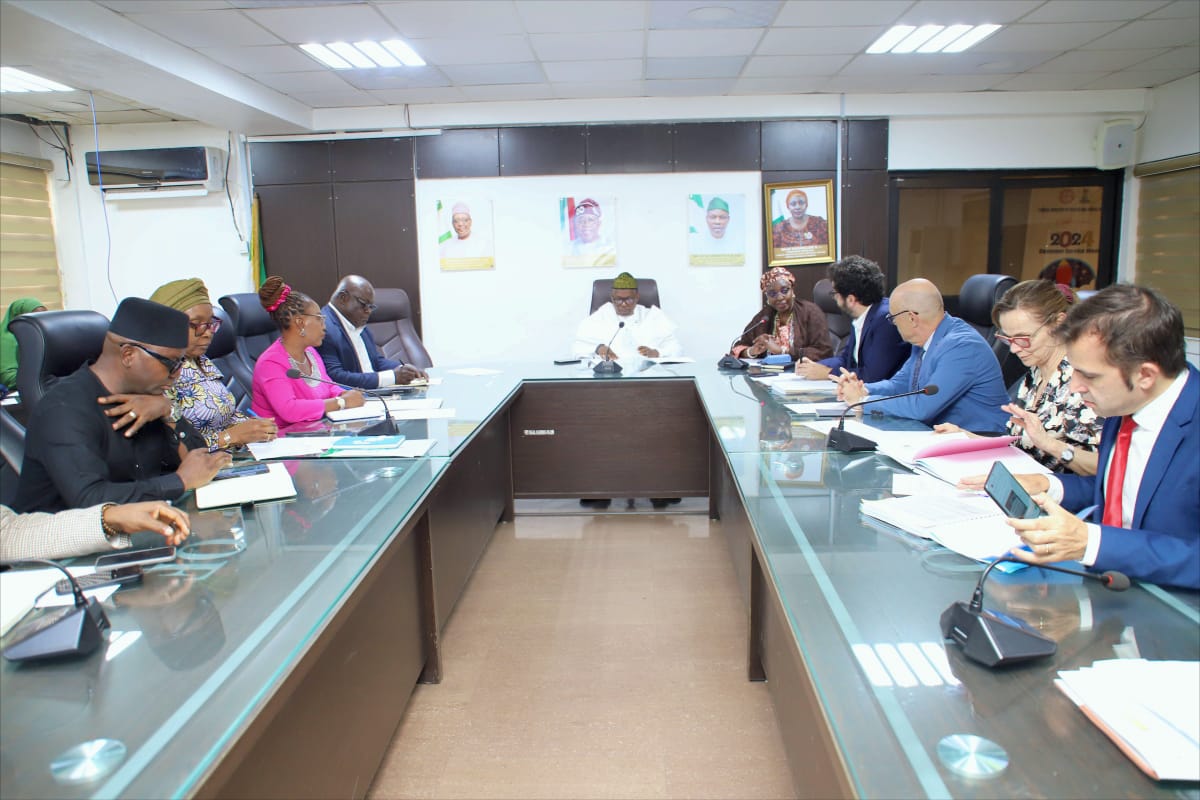
Salako described the global funding shift as a legitimate concern but stressed that Nigeria could not afford to depend on external partners for the wellbeing of its population.
“The concern with the changes around global health funding is a legitimate concern, and Nigeria is also concerned. But we also realise that we cannot be dependent on anybody for the health of our citizens. We must take responsibility and be in the driver’s seat,” he said.
The minister noted that the administration of Bola Ahmed Tinubu was already pursuing comprehensive reforms through the National Health Sector Renewal Investment Initiative, built on four strategic pillars aimed at transforming the sector.
He said the meeting with the Spanish delegation had opened a window for both countries to revisit the Memorandum of Understanding signed in 2022, particularly in the area of technology transfer, which aligns with Nigeria’s push to unlock its healthcare value chain.
According to him, the Presidential Initiative on Unlocking the Healthcare Value Chain is driving efforts to boost local manufacturing in the health sector.
Salako also highlighted Nigeria’s progress in tackling obstetric fistula and gynaecological conditions through the establishment of specialised institutions and provision of free treatment, including social reintegration for affected patients.
He assured the Spanish delegation of Nigeria’s commitment to strengthening bilateral health cooperation.
“We welcome this and I want to assure you that on our side, we will do everything possible to promote that partnership. It is important that we do things more efficiently,” he added.
Earlier, Director of the Spanish Agency for International Development Cooperation, Anton Leis, said the agency was implementing several multilateral health initiatives in Nigeria in collaboration with United Nations Population Fund, UNICEF, and the European Union.
Leis noted that the programmes include efforts to combat female genital mutilation, support polio eradication, and strengthen Nigeria’s medical products industry, adding that about €1.1m had already been committed.
He commended Nigeria’s sector-wide approach to health planning, describing it as fundamental to improving efficiency.
In her welcome remarks, Permanent Secretary of the ministry, Daju Kachollom, said Nigeria and Spain had maintained longstanding relations, noting that both countries signed cooperation agreements in 2022 and 2025 to deepen collaboration in the health sector.
The meeting underscored renewed efforts by both countries to strengthen partnership and improve health outcomes in Nigeria.