By Mercy Gadia
The Africa Polling Institute has trained policy executives and media practitioners on advancing social cohesion, as part of efforts to strengthen national unity, inclusive governance, and evidence-based public communication in Nigeria.
The two-day capacity-building workshop, held on June 17 and 18, brought together government officials, communication experts, editors, journalists, digital content creators, and development practitioners.
The training focused on equipping participants as champions of social cohesion and explored practical approaches to fostering trust, inclusion, peaceful coexistence, and responsible public discourse in an increasingly polarised society.
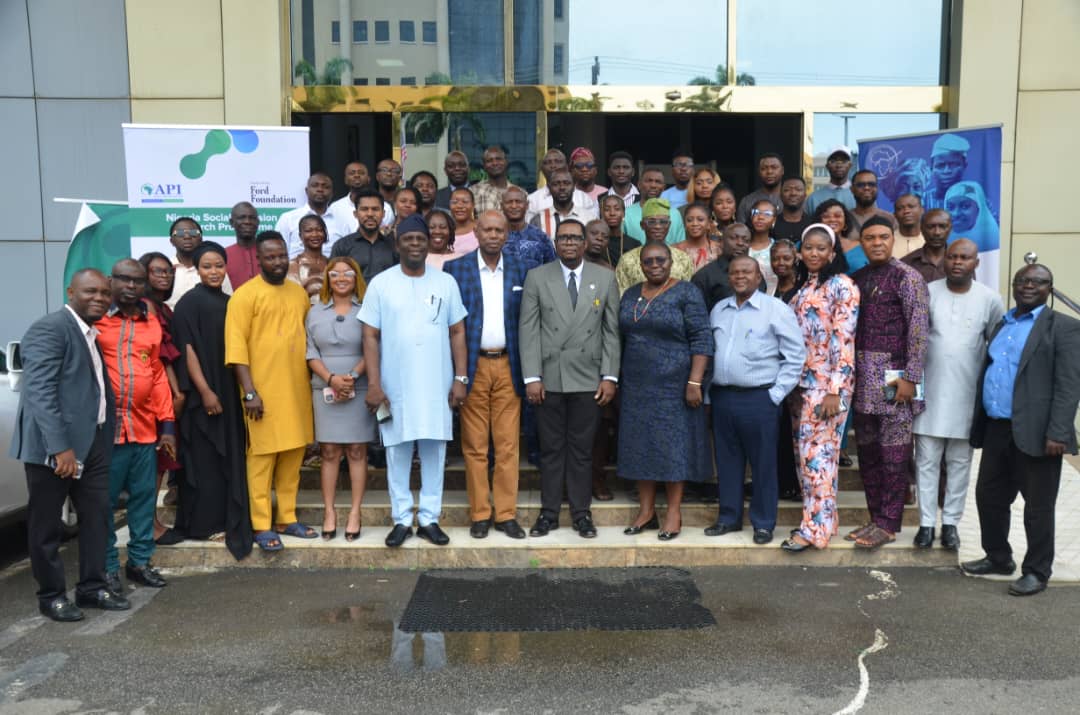
Delivering the keynote address, the Executive Director of the institute, Prof. Bell Ihua, described social cohesion as a critical driver of national development.
He said, “Social cohesion goes beyond peaceful coexistence. It reflects the strength of relationships among citizens, trust in institutions, shared sense of belonging, civic participation, inclusion, and collective commitment to national development.”
Ihua noted that social cohesion has become a key global development indicator, particularly in societies facing economic hardship, insecurity, misinformation, and declining public trust.
He also identified key indicators for measuring social cohesion, including interpersonal trust, confidence in institutions, social inclusion, civic participation, tolerance for diversity, and perceptions of fairness and justice.
Using survey data generated by the institute, he emphasised the need for data-driven policymaking, noting that credible data helps stakeholders design interventions that strengthen unity rather than deepen divisions.
In another session, development communication expert, Dr. Olusoji Adeniyi, examined the impact of digital technology on public discourse, warning that social media platforms have amplified misinformation, hate speech, and divisive narratives.
According to him, “Newsrooms must balance speed with accuracy and ensure that content does not inflame tensions or undermine social cohesion.”
He called for stronger editorial frameworks anchored on ethical journalism, fact-checking, and conflict-sensitive reporting.
Adeniyi also highlighted the role of digital tools in tracking misinformation, monitoring public sentiment, and promoting constructive civic engagement.
Also speaking, media and communication specialist, Odoh Diego Okeyondo, led a practical session on data storytelling, demonstrating how journalists can transform complex survey findings into engaging content using infographics, videos, and social media formats.
“The goal is to simplify data without losing accuracy and to create narratives that resonate with audiences while remaining evidence-based,” he said.
Participants also engaged in hands-on exercises, developing social media content, video scripts, and infographic concepts using social cohesion data.
In a separate session, veteran journalist and media strategist, Ismail Abdulaziz, led a newsroom simulation exercise to test editorial decision-making during crises.
He stressed the importance of responsible reporting, noting that headlines, framing, and source selection can influence public perception and either strengthen or weaken social cohesion.
“Editorial leadership is critical in preventing the spread of harmful stereotypes and unverified information,” Abdulaziz said.
Participants called for stronger collaboration among government institutions, civil society, academia, and the media to address societal divisions and promote democratic resilience.
At the end of the workshop, attendees expressed confidence that the knowledge gained would enhance their capacity to communicate social cohesion issues effectively and contribute to national development.