By Mercy Gadia
…Says 40,000 Women Already Saved
The Federal Government has begun the distribution of Comprehensive Emergency Obstetric and Newborn Care (CEmONC) equipment worth nearly $200,000 per state to 252 health facilities across 30 states, in a renewed push to reduce maternal and newborn deaths in the country.
The intervention, implemented under the Sector-Wide Approach (SWAp) framework of the Federal Ministry of Health and Social Welfare, is designed to strengthen secondary healthcare facilities and improve emergency obstetric and neonatal services nationwide.
Speaking at the launch of the distribution exercise, the Coordinating Minister of Health and Social Welfare, Prof. Muhammad Ali Pate, said the initiative reflects government’s commitment to safer childbirth outcomes under President Bola Tinubu’s health sector agenda.
Pate, who was represented by the Executive Director of the National Primary Health Care Development Agency, Dr Muyi Aina, said over 40,000 women had already benefited from life-saving interventions under the programme.
“Over 40,000 women have already accessed timely life-saving interventions across our CEmONC facilities. These are not just numbers; these are our sisters, our mothers, our neighbours who have been given a second chance at life,” Aina said.
He explained that 252 facilities across 30 states were receiving tailored equipment designed to address specific gaps identified by state governments.
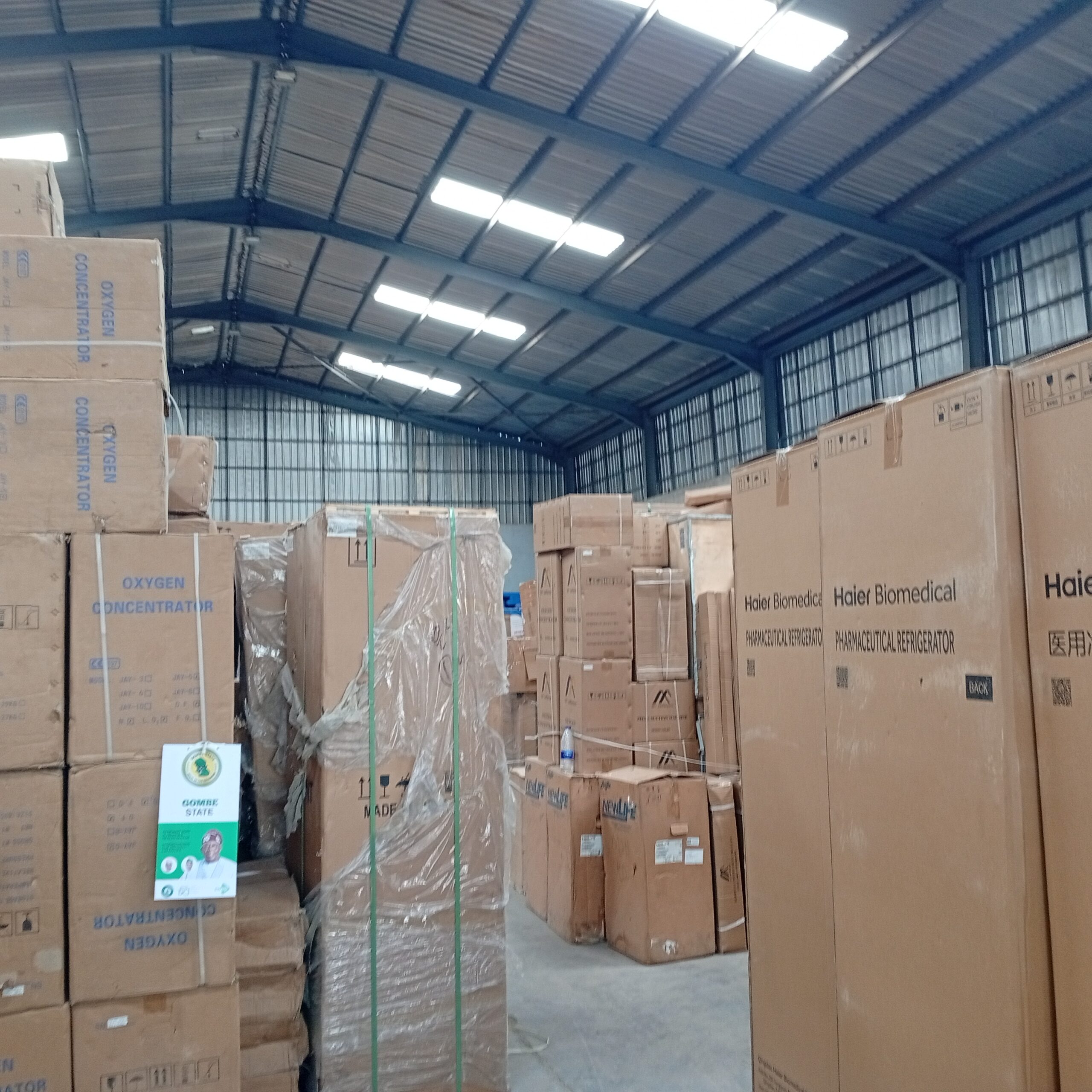
“Nearly 252 facilities across 30 states are receiving equipment that will bridge critical service delivery gaps. This is proof that when we combine resources, align priorities and move in one direction, we can deliver results that will reverberate across the nation,” he said.
According to him, the equipment includes oxygen concentrators, incubators, baby warmers and pharmaceutical-grade refrigerators, depending on each state’s needs.
“One state said the biggest gap is newborn care, so you saw incubators and baby warmers. Some states identified oxygen shortages, so they received oxygen concentrators. These are very targeted and deliberate interventions,” he added.
Aina, however, warned that equipment alone would not solve Nigeria’s maternal mortality challenge, urging states to address staffing shortages, infrastructure deficits and weak referral systems in secondary health facilities.
“We need to ensure these facilities are not just equipped but truly functional. The secondary level is perhaps even worse affected with staffing gaps than every other level,” he said.
He also cautioned against diversion of the equipment, insisting that accountability measures would be enforced.
“These are hard-earned resources. States must ensure they are deployed quickly and not diverted to private facilities. The Federal Government will put measures in place to track and hold people accountable,” he warned.
Also speaking, the Director-General of the National Health Insurance Authority, Dr Kelechi Ohiri, said the intervention had strengthened financial protection for pregnant women and newborns across the country.
Represented by Dr Nnena Kalu, he said 245 facilities had been supported under the programme since 2024, with over 45,000 claims recorded.
“Since implementation in 2024, we have 245 protected facilities and over 45,000 claims so far. Each of those statistics represents a life saved and a future protected,” Kalu said.
She added that neonatal care services had been expanded in about 10 facilities, with over 3,000 claims recorded.
“There are 3,000 lives and babies saved and families protected,” she said.
Kalu called on state governments to complement federal intervention with adequate manpower, stable electricity supply, reliable supply chains and effective referral systems.
“We also need strong referral systems, reliable supply chains, regular power supply and sustained community awareness. All this is needed to have functional healthcare facilities where lives can be saved,” she added.
Earlier, the National Coordinator of the SWAp Coordination Office, Dr Muntaqa Umar-Sadiq, said the initiative was anchored on sustainability, country ownership and performance-based results.
“One of the biggest operations we run is a pay-for-results instrument. States do the heavy lifting of achieving priorities while we reward them for those results,” he said.
He noted that Nigerian health workers remained globally competitive despite shortages in the sector.
“Our doctors, nurses, pharmacists and laboratory technicians are highly desired across the world. If they were not competent, they would not be recruited in countries like the United States, the United Kingdom and Canada,” he said.
In his remarks, the Ekiti State Commissioner for Health and Human Services, Dr Oyebanji Filani, said the SWAp framework was improving coordination between federal and state governments in healthcare delivery.
“What today represents is the incentive framework. We are providing equipment for CEmONC while states provide infrastructure, civil works and human resources. This alignment is minimising duplication and improving efficiency,” he said.
He added that several states had begun reviewing salaries and allowances for health workers to reduce migration abroad.